
Regulation Before Rehabilitation
Your patients are repairing. Are they healing?
Not Ready to Enroll?
Request more information
Free clinician training
Watch Before You Enroll
45 minutes · Nervous system foundations, the three pillars, and how BeWell Method works in clinical practice.
No registration required. Watch now — share with a colleague.
Clinical foundation
Grounded in published science.
Developed with clinical eyes.
The BeWell Method™ draws on research across four domains and has been developed in collaboration with clinicians working at the highest levels of rehabilitative and surgical medicine.
Clinical advisors
Alexandre N. Darani, MD, MS
Pediatric Transplant Surgeon
Assistant Professor of Surgery
Albert Einstein College of Medicine · Montefiore Einstein, New York
Clinical Advisor, BeWell Method™
Mandie Schake, MOTR/L, MS
Occupational Therapist · Clinic Director
Neurological Rehabilitation Specialist
Registered Yoga Teacher
Clinical Advisor, BeWell Method™
Autonomic regulation
Nervous system state directly shapes pain perception and movement availability.
Porges (2011) · Lehrer & Gevirtz (2014)
Breath physiology
Breathing pattern influences physiological stress response and recovery readiness.
Lundberg et al. (1996)
Pain science
Perception and context are primary drivers of pain experience and rehabilitation compliance.
Butler & Moseley (2013)
Yoga as OT intervention
Yoga-based approaches show measurable outcomes in stroke, chronic pain, and rehabilitation.
Schmid et al. (2019, 2021, 2024)
AOTA 2023 official position statement on complementary health approaches explicitly supports clinicians using yoga in clinic to support treatment — citing Schmid's research directly. The professional endorsement is already there. BeWell Method gives clinicians the structured protocol to act on it.
Section I — Polyvagal Theory & Autonomic Nervous System Regulation
Porges, S.W. (2011). The Polyvagal Theory. W.W. Norton & Company.
Porges, S.W. (2009). The polyvagal theory: New insights into adaptive reactions of the autonomic nervous system. Cleveland Clinic Journal of Medicine, 76(Suppl 2), S86–S90.
Section II — Breath Physiology & Heart Rate Variability
Lehrer, P.M., & Gevirtz, R. (2014). Heart rate variability biofeedback: How and why does it work? Frontiers in Psychology, 5, 756.
Lundberg, U., et al. (1996). Psychophysiological stress responses, muscle tension, and neck and shoulder pain among supermarket cashiers. Journal of Occupational Health Psychology, 4(3), 245–255.
Section III — Pain Science & Perception
Butler, D.S., & Moseley, G.L. (2013). Explain Pain (2nd ed.). Noigroup Publications.
Moseley, G.L. (2007). Reconceptualising pain according to modern pain science. Physical Therapy Reviews, 12(3), 169–178.
Section IV — Fascia as Sensory Organ
Schleip, R. (2003). Fascial plasticity — a new neurobiological explanation. Journal of Bodywork and Movement Therapies, 7(1), 11–19.
Schleip, R. (2017). Fascia as a sensory organ. Terra Rosa E-magazine.
Section V — Neuroscience of Agency & Choice
Weiss, J.M. (1971). Effects of coping behavior in different warning signal conditions on stress pathology in rats. Journal of Comparative and Physiological Psychology, 77(1), 1–13.
Ryan, R.M., & Deci, E.L. (2017). Self-Determination Theory: Basic Psychological Needs in Motivation, Development, and Wellness. Guilford Press.
Section VI — Proprioception, Feet & Fall Prevention
Spink, M.J., et al. (2011). Effectiveness of a multifaceted podiatry intervention to prevent falls in community dwelling older people. BMJ, 342, d3411.
Menz, H.B., et al. (2006). Foot and ankle characteristics associated with impaired balance and functional ability in older people. Journal of Gerontology, 60(12), 1546–1552.
Section VII — Yoga as Clinical Intervention: OT Research (Schmid)
Schmid, A.A., et al. (2019). Development and feasibility of an occupational therapy yoga intervention for people with stroke. OTJR: Occupation, Participation and Health.
Schmid, A.A., et al. (2021). Yoga improves quality of life and fall risk factors in a sample of people with chronic pain. Journal of Alternative and Complementary Medicine.
Schmid, A.A., et al. (2024). Yoga and occupational therapy: Studies on yoga as clinical OT intervention in rehabilitation populations. American Journal of Occupational Therapy.
AOTA (2023). Occupational therapy's role with complementary health approaches. American Journal of Occupational Therapy, 77(Suppl 2).
Section VIII — Breath-to-Movement & Static vs. Dynamic Practice
Jerath, R., et al. (2006). Physiology of long pranayamic breathing: Neural respiratory elements may provide a mechanism that explains how slow deep breathing shifts the autonomic nervous system. Medical Hypotheses, 67(3), 566–571.
Cramer, H., et al. (2013). A systematic review and meta-analysis of yoga for low back pain. Clinical Journal of Pain, 29(5), 450–460.
PRICING & LICENSE
Licensing & Pricing
The BeWell Method™ is offered as a professional license rather than a one-time course purchase. This structure allows clinicians to integrate the framework into practice while maintaining ongoing access to training materials and the patient practice library.
Individual Clinician License
$599/year
Founding rate locked for life · unlimited patients · no per-patient fees
Founding clinicians receive full access at a rate that will not be offered after hard launch. Unlimited patients. No per-patient fees.
- One-time clinician training — under 3 hours, self-paced
- Ongoing access to clinician manual and materials
- Licensed use of the BeWell Method™ framework
- Assign practices to unlimited patients
- 12-week patient access per assignment
Clinic & Team Adoption
By organization
Pricing structured per organization size
The BeWell Method™ is designed to scale beyond individual practitioners. Clinics implementing the framework across multiple clinicians may adopt the method at a clinic-wide level — data collection partnerships welcome.
- Shared clinical framework adoption
- Multiple practitioner access
- Expanded implementation support
- Research and data collection partnerships considered
Clinics interested in team adoption may contact directly. ✉︎ Request Clinic Info
How the License Works
Completed once upon enrollment. Remains accessible as a professional reference for as long as your license is active.
Maintains permission to use the BeWell Method™ in clinical practice and allows continued patient library prescribing.
Patients receive 12-week access through clinician referral. Access can be reassigned to new patients at any time.
Why a Licensing Model?
The BeWell Method™ is designed as an ongoing clinical tool rather than a static educational course. Licensing supports continued refinement, library expansion, practitioner feedback integration, and long-term sustainability of the method.
Founding Clinician Advantage
Founding clinicians are the first licensed practitioners bringing regulation-first care into clinical settings. Their rate is locked for life — future cohorts will enter at a higher licensing tier. This is an invitation to join early — not a discount promotion.
Why Regulation Matters in Rehabilitation
Recovery is not limited by strength or mobility alone.
Clinicians regularly encounter individuals who understand exercises but struggle to engage consistently, tolerate movement, or carry progress between sessions. Pain sensitivity fluctuates. Guarding increases. Motivation appears inconsistent despite effort.
These challenges are often interpreted as compliance or conditioning issues. Increasingly, research and clinical experience point toward another factor:
Nervous system state influences movement availability, perception of pain, and learning capacity.
The BeWell Method™ introduces practical ways to address regulation alongside rehabilitation — without adding complexity to existing care.
The BeWell Method™ — Clinician Licensing Overview
Healing rarely follows a straight line.
After nearly two decades teaching accessible movement in community settings — working closely with older adults, individuals living with pain, and people navigating recovery — one pattern became impossible to ignore: progress does not begin with intensity. It begins with regulation.
The BeWell Method™ was built from practical experience bridging therapeutic movement, nervous system education, and real human variability — not ideal conditions, but real lives.
The framework gives clinicians a structured way to support nervous system readiness alongside rehabilitation, helping individuals become more receptive to movement, learning, and recovery between sessions.
- Organized into: Four progressive levels grounded in one guiding principle — Regulation before rehabilitation.
- Level 1: Foundational regulation through breathwork + awareness of three interacting centers: Perception, Feeling, Moving.
- Clinician-led: You retain full discretion on how and when to introduce the method. Clinical reasoning leads.
- Use cases: In-session integration, between-visit prescriptions, handouts, and guided video access.
- Outcome: Increased participation, reduced guarding, and more sustainable engagement between sessions.
The BeWell Method™ is not a protocol. It is a clinical ecosystem — designed to help regulation, movement, and integration reinforce one another over time.
Early licensing partners are helping shape the evolution of this work through real-world application and feedback. In recognition of that collaboration, founding clinicians receive preferred pricing that will not be offered once the program enters full release.
Because meaningful rehabilitation is not built by doing more. It is built by creating the conditions where recovery can actually occur.
A SIMPLE THREE-STEP SYSTEM
How the BeWell Method™ Works for Clinicians
Designed to integrate into your existing practice — without changing your treatment model or adding complexity to your workflow.
Complete the Clinician Training
After purchase, you receive immediate access to the self-paced training — completed once as your foundation for ongoing use.
- Nervous system regulation principles + the Three Centers framework
- Breath + movement foundations, clinical language, and integration strategies
- Clinician manual + downloadable patient handouts organized by level
- Assigning guidance for real clinical scenarios
Assign the Patient Library
Share a simple access link or QR code. Patients receive 12-week access to the guided BeWell Patient Library.
- Four levels of clearly labeled practices + built-in tutorials
- Optional handouts for home practice
- Use in-session for guided regulation before treatment
- Assign like exercises: "L1.1–L1.4 this week."
Support Recovery Between Visits
Extend your care beyond the clinic with short, repeatable regulation practices that build independence.
- Improves engagement between appointments
- Reduces fear-based movement responses and guarding
- Reinforces therapeutic progress with repeatable tools
- Annual license maintains ongoing clinical use
Designed to support — not replace — your clinical expertise. The BeWell Method provides a structured way to address nervous system readiness so rehabilitation can progress more effectively.
WHO THIS IS FOR
Who the BeWell Method™ Is For
Built for clinicians who have already noticed something true: rehabilitation outcomes are influenced by more than strength, range, and repetition.
You may already see that:
- Some individuals understand their exercises but struggle to tolerate movement on high-pain days.
- Progress fluctuates in ways that are not purely biomechanical.
- Fear, guarding, or overwhelm can limit engagement more than tissue capacity.
- Education alone does not always translate into regulation.
You may already be adjusting for nervous system state — intuitively pacing, cueing breath, modifying load, or slowing down the session when needed.
The BeWell Method™ gives structure and language to what many experienced clinicians are already sensing.
Designed for practitioners who:
- Want patients engaged between visits
- Value autonomy and education over dependency
- Recognize that perception influences pain and movement
- Are curious about integrating regulation without abandoning their current clinical model
- Work in private practice or have purchasing autonomy
This is not a replacement for rehabilitation.
It is an additional layer — one that supports readiness, tolerance, and long-term engagement.
FOUNDING CLINICIAN COHORT
Join Before Hard Launch
The BeWell Method™ is built for early-adopting clinicians who recognize that outcomes are shaped by nervous system regulation, patient perception, and movement literacy — not just exercise prescription.
Founding clinicians are not beta testers. They are the first licensed practitioners to bring regulation-first care into their clinical settings — and the clinicians who will be named in future feasibility research as the people who helped build this from the beginning.
Who This Is For
Clinicians in private practice or with purchasing autonomy who see nervous system state affecting outcomes daily.
- Physical therapists in private practice
- Occupational therapists and OT clinic directors
- Chronic pain and integrative medicine clinicians
- Behavioral health practitioners
- Cardiac rehab and surgical recovery specialists
How It Works
What Founding Clinicians Receive
- Full BeWell Method™ Clinician Training
- Clinician Manual & Prescribing Framework
- Patient Handout Library — all four levels
- Licensed patient library access — 62 guided videos
- Assign practices to unlimited patients
- 12-week patient access per assignment
$599/year. Founding rate locked for life · unlimited patients · no per-patient fees.
Founding rate is locked for life. This price increases at hard launch in 2026. Clinics interested in program-wide implementation are welcome to reach out directly — data collection partnerships considered.
This is an invitation to join early — not a discount promotion.
THE CORE PRINCIPLE
Regulation Before Rehabilitation.
The body can repair under stress. It can only heal in safety. BeWell Method gives clinicians the tools to create that safety.
WHAT CLINICIANS RECEIVE
What Founding Clinicians Receive
Enrollment in the BeWell Method™ provides both professional training and a licensed clinical tool you can begin using immediately.
BeWell Method™ Clinician Training
A structured training introducing Regulation Before Rehabilitation and practical clinical application. Under 3 hours. Self-paced. Completed once.
- Nervous system foundations for rehabilitation
- The Three Centers model (Perception, Feeling, Moving)
- Breath regulation and pain modulation principles
- Movement literacy and spinal integration
- Language and perception in recovery
- Clinical integration examples and guidance
Clinician Manual & Prescribing Framework
Downloadable clinician resources designed to support implementation without adding complexity.
- Lecture reference manual
- Practice selection guidance
- Level progression framework
- Clinical language support
- Integration suggestions for session and between-visit use
Licensed Patient Practice Library
62 guided video practices across four levels — organized around regulation and movement readiness, not body parts.
- Assign practices to unlimited patients
- Guide level progression
- Allow self-directed exploration supported by tutorials
Patient Handout Library (All Levels)
Printable handouts aligned with each practice to support prescribing and patient preparation.
- What to expect from each practice
- How to prepare (chair, strap, environment)
- How practices support their recovery
Immediate Clinical Application
Short practices designed for real clinical schedules — typically 3–6 minutes.
- During sessions for co-regulation or preparation
- Between visits as assigned support
- As prehabilitation preparation before surgery
- During recovery fluctuations or high-pain days
Founding Clinician Pricing & Influence
Founding clinicians are the first to bring regulation-first care into clinical settings — and receive locked-in advantages.
- Rate locked for life — increases at hard launch
- Shape future training, tools, and clinical applications
- Named in future feasibility research
- Influence the evolution of the program before it scales
Designed to support rehabilitation, prehabilitation, and recovery across changing nervous system states — without replacing your clinical expertise or adding workflow complexity.
Little by little, again and again.
GETTING STARTED
Getting Started is Simple
Designed to fit into an existing clinical workflow. Immediately after enrollment:
Access Your Clinician Training
Begin the self-paced BeWell Method™ Clinician Training immediately after enrollment. Under 3 hours. Complete it once and it remains available as an ongoing reference.
Unlock the Patient Library
Once training is completed, the full BeWell Patient Library — 62 guided videos across four levels — becomes available for clinical use.
Begin Assigning Immediately
Share a clinician access link or QR code with patients. They receive 12-week access and can begin Level 1 regulation practices right away.
Integrate at Your Own Pace
Assign practices between visits, use regulation practices before treatment sessions, support home participation with handouts or videos, and reinforce skills between appointments.
Shape the Method as You Use It
As a founding clinician, your real-world observations directly inform future training, tools, and clinical applications. You are building this alongside us.
No workflow overhaul required
- No new software to learn
- No scheduling system changes
- No added administrative burden
- No per-patient fees — unlimited assignments
- Use in-session, between visits, or both
Founding cohort closes June 30, 2026. Rate locked for life — increases at hard launch.
Enroll as Founding Clinician →Bring Regulation Into Your Practice
Support rehabilitation with a regulation-first framework designed to integrate seamlessly into clinical care.
Enroll as a Founding ClinicianEarly adopters receive founding pricing and help shape the future development of the BeWell Method™.
Regulation Before Rehabilitation.
ABOUT
About Kimberlea Smarr
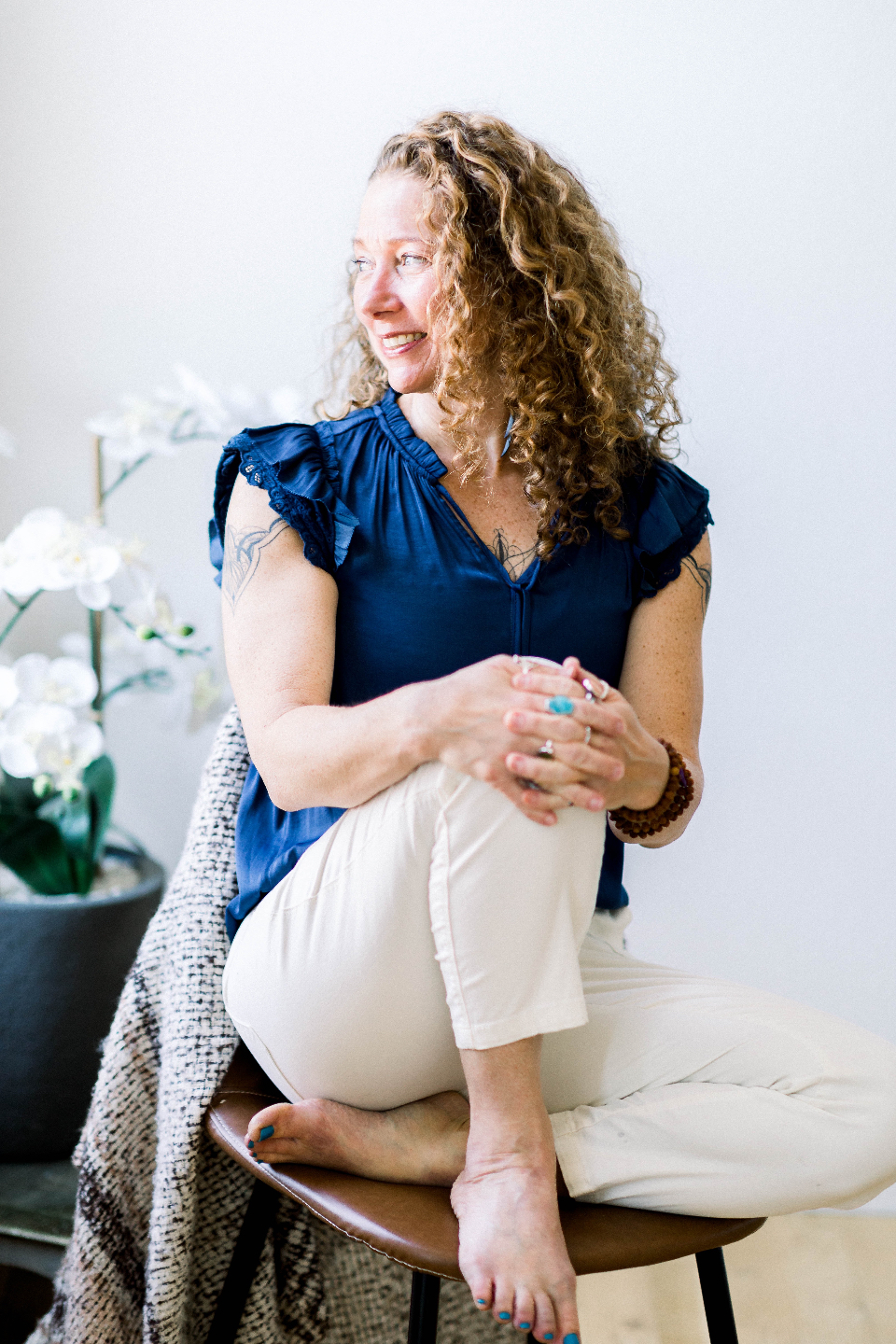
Kimberlea Smarr is a nervous system educator and therapeutic movement teacher with nearly two decades of experience translating regulation principles into practical, accessible practices for real people. She has led a chair yoga program for older adults and individuals in recovery for 18 years — one of the longest-running programs of its kind in her region — working weekly with people navigating surgery, chronic pain, and changing physical capacity. Her work developed through more than 16,000 hours of teaching across community movement programs, therapeutic settings, private sessions, and clinician collaboration. The patterns she observed in that room, week after week, year after year, are what became the BeWell Method™.
Rather than emerging from protocol design, the BeWell Method™ evolved through years of adapting movement in real time so people could participate safely, remain engaged, and gradually rebuild trust in their bodies.
Across these environments, a consistent pattern became clear: When nervous system regulation improved, movement became more available. When regulation was absent, effort alone rarely produced lasting change.
Kimberlea is the founder of BeWell Yoga, a community-based studio she owned and operated for five years prior to its closure during the COVID-19 pandemic.
The studio served as a living laboratory for accessible movement education, where diverse populations practiced side by side and teaching methods were continually refined to meet real human variability.
Her teaching foundation draws from extensive and ongoing training across multiple movement and therapeutic traditions, including:
These traditions informed a deep understanding of alignment, progression, and adaptability rather than stylistic practice.
While specializing in therapeutic movement, Kimberlea spent 13 years teaching acrobatic dance and is certified through Acrobatic Arts,
a curriculum recognized by Cirque du Soleil for its structured progression and injury-prevention methodology.
This background shaped her understanding of developmental sequencing, biomechanics, and how nervous system state influences learning, confidence, and movement efficiency across ability levels.
As a Master Freediver, Kimberlea trained in environments where regulation is not theoretical but physiological necessity.
Freediving deepened her understanding of breath mechanics, CO₂ tolerance, and the direct relationship between nervous system state and physical capability.
These experiences reinforced principles later supported by neuroscience research: regulation fundamentally shapes perception, performance, and adaptability.
Kimberlea has led workshops and international retreats and continues to teach across diverse environments, refining her ability to communicate complex nervous system concepts in ways that are accessible, practical, and repeatable.
Her work consistently bridges clinical understanding with lived human experience.
Kimberlea openly shares that she lives with ADHD and dyslexia and spent much of her early life in a chronically dysregulated state.
Yoga and breathwork provided her first direct experience of regulation long before she had language to describe it.
Neuroscience later offered the framework that explained what she had experienced firsthand.
Alongside her professional work, Kimberlea raised four children — an experience that deepened her understanding of nervous system development, patience, adaptability, and the reality that growth rarely follows a linear path.
The BeWell Method™ emerged from this intersection of long-term teaching, movement progression, breath training, and neuroscience alignment.
It was designed to help clinicians move beyond explaining nervous system concepts toward providing individuals with practical tools they can use independently between visits.
The framework supports:
Kimberlea's work focuses on helping clinicians extend their impact beyond the clinic by equipping individuals with simple, repeatable practices that support healing long after discharge.
Why a movement teacher — not a clinician — built this
⌄
Professional Background
Movement & Progression Expertise
Breath & Nervous System Regulation
Teaching Across Communities & Cultures
Lived Experience
The BeWell Method™
FAQ
Frequently Asked Questions
Will individuals actually use the practices? ⌄
The BeWell Method™ was designed around short, accessible practices that fit real recovery environments. Most practices are 3–6 minutes and require little to no equipment.
The library emphasizes regulation and repeatability rather than completion or progression. Individuals are encouraged to revisit practices as needed, helping build familiarity and sustainable habits rather than adding more tasks to rehabilitation.
Clinicians may prescribe specific practices or allow guided self-exploration supported by tutorials and preparation handouts.
How does patient access work? ⌄
Clinicians share a direct access link with individuals when appropriate.
Each referral provides 90-day access to the patient practice library, aligning with typical rehabilitation timelines. Access naturally concludes at the end of this period.
If future care is needed, clinicians may reassign access by sharing the same link again.
Does this replace rehabilitation or exercise prescription? ⌄
No. The BeWell Method™ is designed to support rehabilitation — not replace it.
The framework focuses on nervous system readiness, movement confidence, and engagement, helping individuals better participate in the care already being provided.
Can I use practices during sessions? ⌄
Yes. Many clinicians use practices in-session to support regulation before manual therapy, exercise, or education.
Short practices may be used while preparing treatment, transitioning between activities, or helping individuals settle during high-pain or high-stress visits.
Do individuals need to complete all four levels? ⌄
No. The library is not designed as a program to finish.
All individuals benefit from Level 1 practices, while clinicians may guide progression or allow flexible navigation based on presentation and recovery needs.
Bring Regulation Into Your Practice
Support rehabilitation with a regulation-first framework designed to integrate seamlessly into clinical care.
Enroll as a Founding ClinicianEarly adopters receive founding pricing and help shape the future development of the BeWell Method™.
Regulation Before Rehabilitation.
Not Ready to Enroll?
Request more information
Request More Information
If you’re interested in the BeWell Method™ but not ready to enroll, leave your email and I’ll send additional details for clinicians.